

Golfing After Overseed? Here's What To Know
Arizona’s overseed season is just around the corner, and as courses prepare for cool-season grass, many facilities will temporarily close.
3 min read
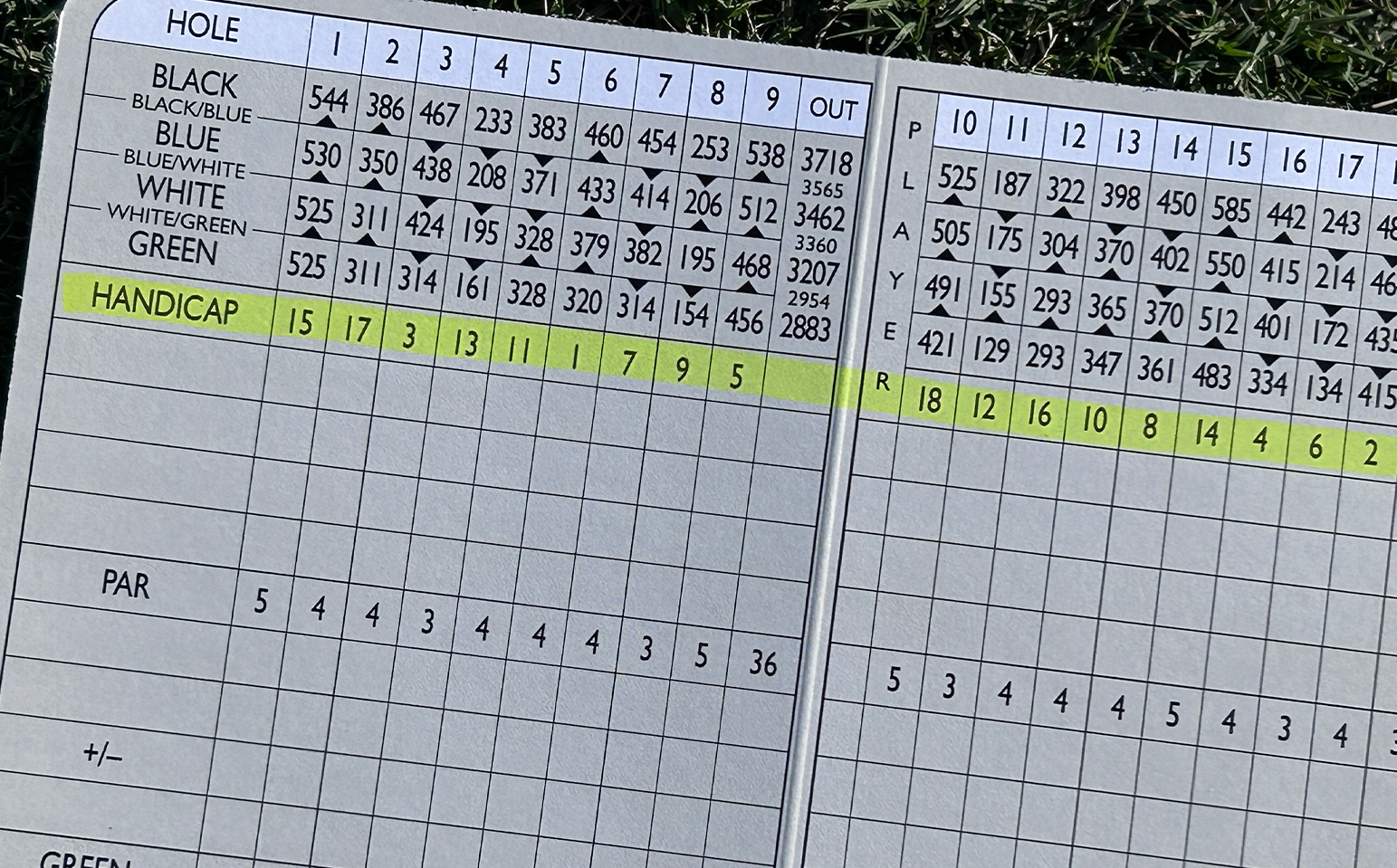
Take a look at a scorecard.
Naturally, you’re going to find yardages, pars, slope and course ratings, and the stroke index allocation — commonly labeled “Handicap” or something similar on the scorecard.
The stroke index allocation is the set of numbers from 1-18 that represent the difficulty of each hole on the course, with No. 1 being the most difficult and No. 18 being the least difficult.
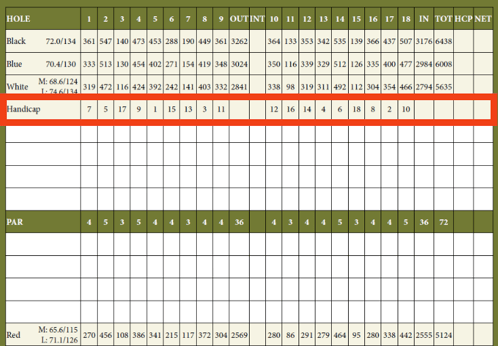
An example of a scorecard with stroke index allocation. The section in red labeled "Handicap" ranks each hole based on difficulty. The hardest hole on the course receives the No. 1 ranking with the easiest getting the No. 18 ranking.
Typically, the odd numbers are assigned to the front nine and the even numbers to the back nine. If the back nine plays significantly more difficult than the front, the odds can be flipped.
But what is the purpose of ranking the holes in the first place?
The stroke index allocation is used to assign handicap strokes. If you’re playing match play, this is how you know which holes you get strokes on, commonly called “pops” in golf slang.
For example, if a player is receiving one stroke from their opponent, that stroke will come on the No. 1 handicap hole. If they are receiving five strokes, those strokes will come on the five holes ranked 1-5.
Handicap strokes also come into play when calculating net double bogey, the maximum hole score that can be posted for handicap purposes in GHIN.
The formula is: Net double bogey = two strokes over par + any handicap strokes received on the hole
For example, if you make a 10 on a par-4 and receive one handicap stroke on that hole, your net double bogey is 7. That’s two strokes over par, 6, plus one handicap stroke.
It’s recommended that golfers post scores hole-by-hole. When you do, the GHIN system will automatically adjust any hole score above net double bogey for you.
So, in the example above, if you enter a 10, GHIN will adjust it to a 7 for handicap purposes.
Golfers who post only a total score instead of entering scores hole-by-hole will need to make the adjustments to their score themselves.
That process has changed over the years.
Prior to 2020, the methodology for determining the stroke index allocation was more focused on match play. The average scores of both a scratch golfer and a bogey golfer were compared on each hole. The hole with the largest difference between the two players’ scoring averages was ranked No. 1, or the most difficult hole.
Beginning in 2020, the USGA recommended a methodology focused more on stroke play.
Instead of comparing one type of player against another, the current methodology looks at how players score on each hole compared with par.
Scoring data is collected for each hole across all tees. The larger the difference between the players’ scoring average and par, the more difficult the hole is considered to be and the higher it is ranked in the stroke index allocation.
There’s another layer to the process known as the triad method.
The nine-hole halves of a course are each broken into three three-hole segments, or triads. The goal is to spread the more difficult holes throughout the nine rather than bunching them together.
For example, if the front nine’s three most difficult holes are ranked Nos. 1, 3 and 5, the triad method would ideally place one of those holes in each three-hole segment.
If the scoring data and the math allow for it, the triad method is recommended because it helps balance the distribution of handicap strokes across the nine holes.
There’s also a preference for having the hardest hole — No. 1 or No. 2, depending on the nine — in the first or second triad.
Why?
Think back to match play. If a player is receiving just one stroke in a match, that stroke comes on the No. 1 handicap hole. If that hole is the final hole of the nine, there’s a chance the match never gets there, meaning the player may never get the benefit of that pop.
AZ GOLF acts as an assistant in the process of determining the stroke index allocation for golf courses.
A club is completely allowed to conduct the process on its own. If it makes changes to its stroke index allocation, however, it needs to notify AZ GOLF so the updates can also be made in GHIN.
If AZ GOLF and Director of Handicapping & Course Rating Mike Mason are involved, Mason follows the USGA methodology.
He’ll go back through several years of scoring records, getting as close as possible to the last time the course’s stroke index allocation was updated.
Mason says a few thousand scores can provide a pretty good trend, although more data generally means more accurate numbers.
He recommends that courses review their stroke index allocation every few years, with a more comprehensive look taken about every five years.
Once Mason provides his report and recommendations to the course, the club can decide what to do with them. The course committee can make adjustments they feel are necessary based on their knowledge of the course and its membership.
After all, the goal is to create a stroke index allocation that works fairly for all players, whether they’re posting a score for handicap purposes or battling an opponent for bragging rights in a match.
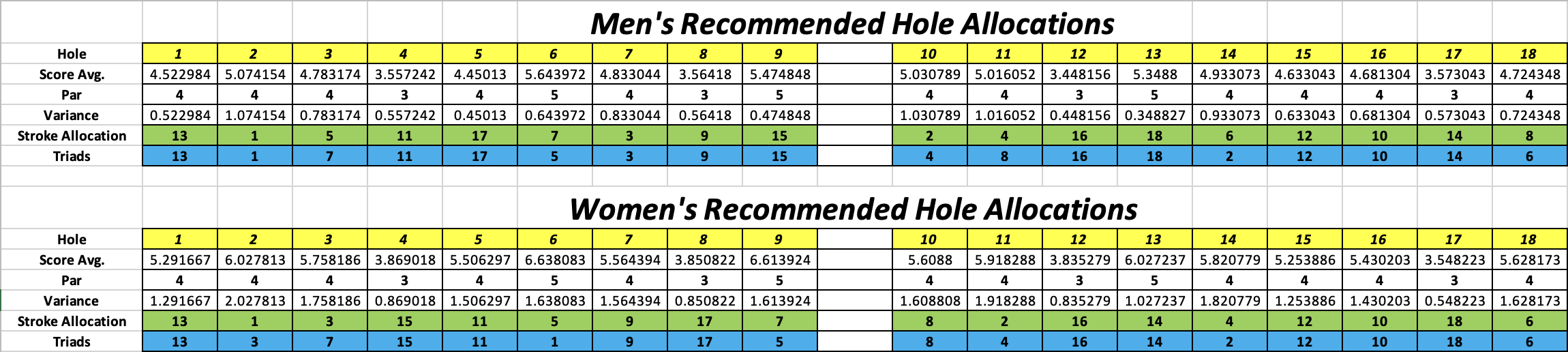
Above is an example of a report Mason and AZ GOLF may send to a course including scoring averages on each hole and the variance compared to par. The recommendation also splits each 9 into triads.

Arizona’s overseed season is just around the corner, and as courses prepare for cool-season grass, many facilities will temporarily close.

 Tori Schuller : May 14, 2026, 8:40:19 AM
At the ripe age of seven, I taught my mother to take her club back slower to hit the ball better.

1 min read
Tori Schuller : Feb 11, 2026, 1:05:50 PM
We sat down with Amy Fruhwirth, former LPGA professional and AZ GOLF's Championships Manager, to ask her five questions about her golf journey and...