Skip to the main content.
JOIN/RENEW POST SCORE

3 min read

A Guide to Arizona's Abnormal Summer Course Conditions

A Guide to Arizona's Abnormal Summer Course Conditions

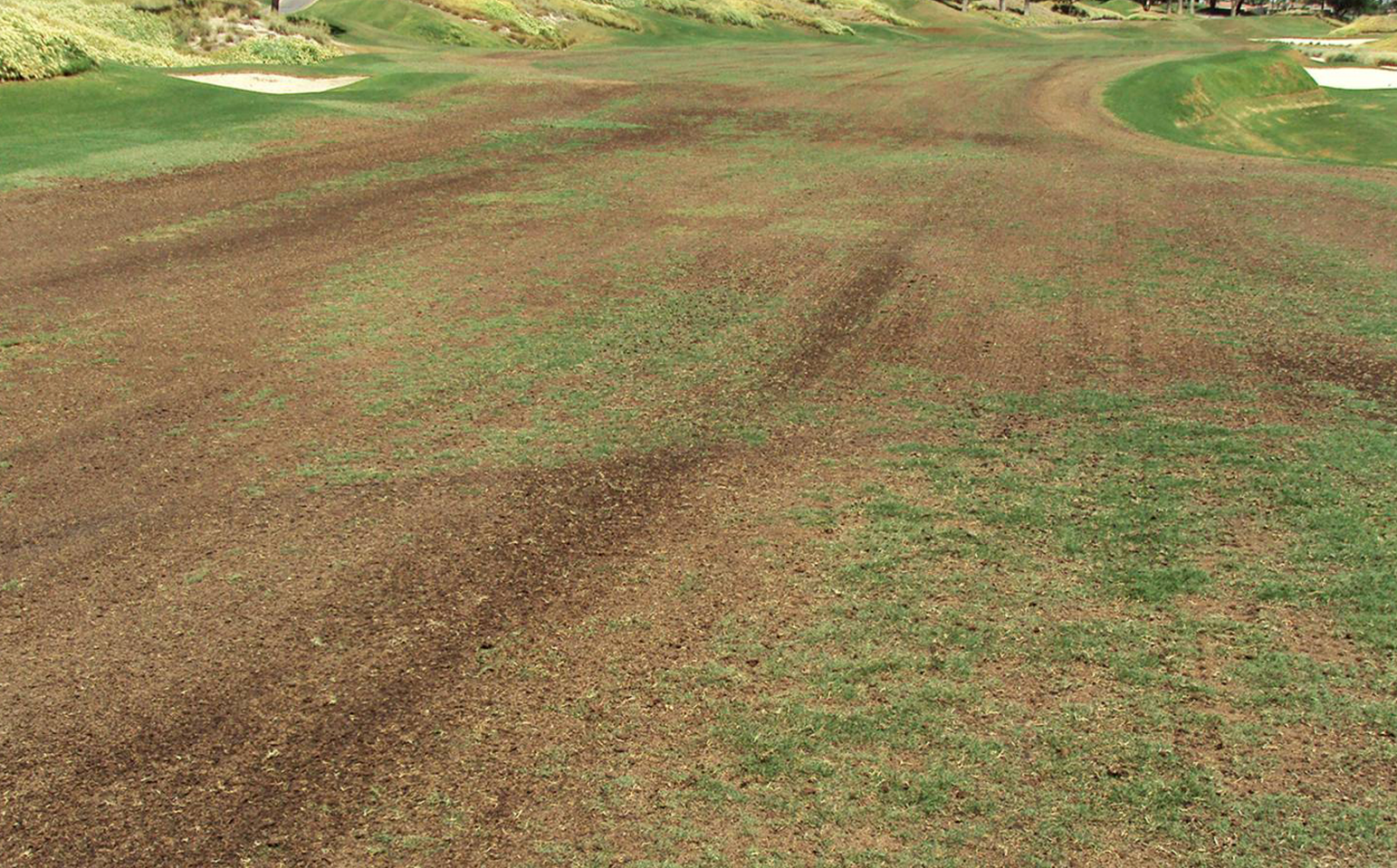
As another Arizona summer brings triple-digit temperatures across the state, golfers are bound to encounter some less-than-perfect playing conditions. Brown fairways, bare patches and aeration holes are common sights this time of year, but when are you actually entitled to free relief?

The answer isn't always as straightforward as many golfers think.

According to AZ GOLF Director of Handicapping and Course Rating Mike Mason, one of the biggest misconceptions in golf is that players can decide for themselves when a course condition deserves relief.

"Most of these situations are not determined by the golfer," Mason said. "The golf course staff or committee has to make that decision and communicate it to players."

Before your next round, here's what you should know about some common abnormal course conditions.

Preferred Lies
If you've ever hit a perfect drive only to find your golf ball covered in mud, you're familiar with the purpose of preferred lies.

The USGA allows preferred lies when widespread course conditions such as extreme heat create poor playing conditions across much of the golf course. The key word is widespread.

It doesn't have to affect every hole, but the conditions should impact a significant portion of the course before preferred lies are implemented.

When the golf course staff or handicap committee puts the procedure into effect, players may mark, lift, clean and place their golf ball in closely mown areas, including fairways and green surrounds.

It is strongly recommended that the golfer is not making that decision on their own. Players with concerns should talk to the staff and play by their determination. If that conversation is unavailable and the player makes the determination to allow preferred lies, the score should still be posted.

"The purpose is to eliminate things like mud balls," Mason said. "It allows players to clean their golf ball instead of having to hit a shot with a large clump of mud attached."

One important limitation often gets overlooked. Preferred lies only apply to closely mown areas.

If your ball finishes in the rough or another challenging area, you're expected to play it as it lies, even if it's muddy.

Ground Under Repair
My ball landed in a patch of dirt with no grass. Do I get relief?

Usually, the answer is no.

Many golfers assume any bare patch is automatically considered ground under repair, but that's a misconception.

According to the Rules of Golf, ground under repair is designated by the golf course, typically using paint, stakes or another form of marking. Players cannot decide on their own that an area qualifies for free relief.

However, there are exceptions when course conditions become widespread.

"If there are widespread issues, the golf course is likely not going to go out and mark all of that," Mason said. "We like to call that 'Swiss cheese.' If you are white circling every single issue on the golf course, that is not realistic depending on how widespread it is."

In those situations, the committee or golf course staff may announce that bare areas in closely mown portions of the course should be treated as ground under repair.

If that local guidance has been provided, players simply take relief at the nearest point of complete relief, no closer to the hole, and continue play.

The important takeaway remains the same that golfers can never make that determination themselves.

If you believe conditions warrant relief, Mason recommends discussing it with the golf course staff or committee before your round.

Aeration Holes
Aeration holes create another source of confusion.

While freshly punched greens and fairways may not be anyone's favorite playing conditions, aeration holes are not automatically considered ground under repair.

"Free relief is generally not allowed for aeration holes," Mason said. "That said, there is a Model Local Rule that needs to be determined by staff and/or committees that does allow you relief from the aeration holes."

Only the golf course staff or committee can decide whether that Local Rule is in effect. If relief has been authorized, how you proceed depends on where your ball lies.

On the putting green, you find the nearest point of complete relief, no closer to the hole, and place the ball.

Anywhere else on the course, you identify your nearest point of relief, then drop within one club-length, no closer to the hole.

Golfers should also remember that aeration holes themselves cannot be repaired before making a stroke, whether on the green or elsewhere.

One myth Mason hopes golfers avoid is treating aerated greens as automatic two-putts. While some casual groups may adopt that practice, it is not recognized by the Rules of Golf.

"If your group or someone at the golf course tells you to play that way, that score is not postable," Mason said.

When courses are punched, there are cases where some clumps of dirt are left behind. Those dirt clumps are considered loose impediments and may be removed.

However, if moving the dirt causes your golf ball to move, the player is responsible for the one-stroke penalty for causing the ball to move.

Let the Handicap System Help
If the golf course chooses not to implement preferred lies or adopt Local Rules for poor conditions, players may still benefit through the World Handicap System.

The Playing Conditions Calculation (PCC) evaluates scores submitted each day and determines if the course played significantly more difficult than expected.

If scoring conditions were unusually difficult that day, the handicap system automatically adjusts eligible scores to reflect those tougher playing conditions.

Rather than creating your own relief, trust the process.

The Bottom Line
Whether it's preferred lies, bare patches, aeration holes or another unusual condition, the same principle applies. Players don't decide when free relief is available. The golf course staff or committee does.

If the committee deems that conditions are so poor and these relief options are not viable, then in conjunction with the state association, score posting can be paused until conditions improve.If you're ever unsure, ask before your round begins.

Understanding when relief is and isn't available not only helps you avoid penalties, but also ensures everyone is playing by the same Rules of Golf.


Arizona's Most Challenging Golf Courses

Arizona's Most Challenging Golf Courses

With nearly 400 golf courses, Arizona features tracks of all shapes, sizes and difficulties. AZ GOLF took the opportunity to sit down with its...

Read More
Smooth Like Butter: Ethan Butters ties Tucson CC Course Record At 102nd Arizona Amateur

Smooth Like Butter: Ethan Butters ties Tucson CC Course Record At 102nd Arizona Amateur

At 17 years old, Ethan Butters has proven he is one of Arizona's brightest young golf talents.

Read More
Arizonans Tee Up For Success, On and Off the Course, with the Underrated Tour

Arizonans Tee Up For Success, On and Off the Course, with the Underrated Tour

In June, Alexis Lamadrid claimed victory at the Underrated Tour’s season opener at Old Barnwell in Aiken, S.C. With this win, the 17-year-old from...

Read More